

New Study Supports High-Performance Detection of Drink Spiking Drugs Using Advanced Enzymatic Rapid Test Technology
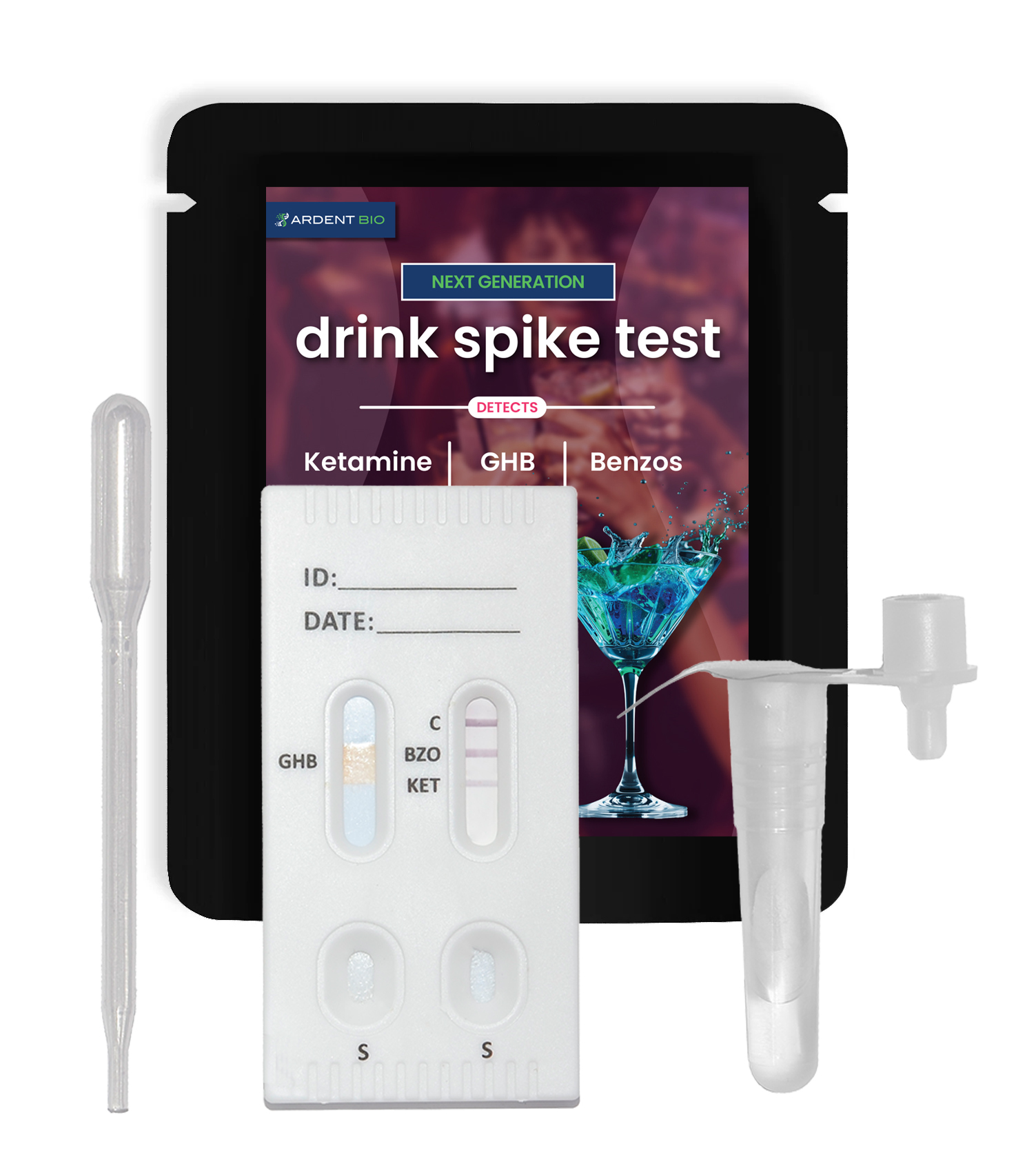
Drink Spike Test by Ardent Bio
Ardent Bio Highlights Next-Generation Approach for Identifying GHB, Ketamine, and Benzodiazepines in Beverages
Detecting GHB has long been a major challenge in rapid screening. Enzymatic detection enables greater accuracy and consistency than earlier methods.”
HOUSTON, TX, UNITED STATES, March 30, 2026 /EINPresswire.com/ -- Heightened awareness of drink tampering risks in nightlife settings, university campuses, and large social gatherings has accelerated the need for reliable detection tools. Recent scientific findings are now reinforcing the effectiveness of newer technologies designed to identify commonly used substances such as GHB, ketamine, and benzodiazepines in beverages.— Preston Reynolds
Rising Demand for Reliable Drink Safety Solutions
As public concern continues to grow, consumers and institutions are increasingly seeking dependable ways to screen beverages. While earlier rapid tests have shown some capability, particularly for ketamine and benzodiazepines, they have historically struggled with consistent detection of Gamma-Hydroxybutyrate (GHB).
GHB presents unique challenges due to its chemical simplicity and the influence of beverage variables such as acidity, coloration, and composition. Detection is further complicated by the presence of Gamma-Butyrolactone (GBL), a related compound that can convert to GHB and remains available in certain industrial contexts.
Evaluation Highlights Limitations of Legacy Testing Methods
A 2025 study conducted a controlled laboratory comparison of multiple commercially available drink spike tests across a broad spectrum of beverages, including wines, beers, mixed drinks, juices, and soft drinks.
Results showed that many first-generation products rely on pH-sensitive dye systems, such as bromocresol green, which respond to general chemical shifts rather than directly detecting target substances. This indirect mechanism often led to variability in results, particularly in darker or chemically complex drinks, and required higher concentrations of drugs to trigger a positive response.
Enzymatic Technology Demonstrates Improved Specificity
Researchers identified enzyme-based detection systems as a more precise alternative—particularly for GHB. These systems use biologically selective reactions that interact directly with the target molecule, producing a measurable signal based on molecular recognition rather than environmental changes.
Because of this specificity, enzymatic methods are significantly less affected by beverage color, turbidity, or pH fluctuations, allowing for more consistent performance across a wide range of drink types.
Next-Generation Rapid Test from Ardent Bio
Leveraging these advancements, Ardent Bio has developed an enzymatic rapid test designed specifically to detect GHB at a 99% rate while also detecting ketamine, and benzodiazepines under real-world conditions with improved reliability.
Key Features:
• Multi-drug detection: GHB, ketamine, and benzodiazepines
• Approximately 99% analytical accuracy and specificity for GHB
• Detection sensitivity down to 0.1 mg/mL
• Effective across diverse beverages, including red wine, dark beer, cocktails, and soft drinks
• Results available in approximately six minutes
• Clear, easy-to-interpret visual readout
Expanding Preventive Strategies
Beyond rapid testing kits, Ardent Bio offers additional safety solutions such as drink screening strips and protective drink covers. These complementary tools support a layered approach to reducing drink tampering risks in social environments.
Learn More:
Next Generation Drink Spike Test
www.NotSpiked.com
www.ArdentBio.com
Referenced Studies:
1. Wu AHB et al. Journal of Forensic Sciences. 2025;70:2535–2541.
2. Child AM, Child P. Canadian Society of Forensic Science Journal. 2007.
3. Quest DW, Horsley J. Journal of Analytical Toxicology. 2007.
4. Drinkaware. Drink Spiking Research Findings. 2024.
5. Germain M et al. Forensic Science International. 2023.
6. Meyers JE, Almirall JR. Journal of Analytical Toxicology. 2004.
Preston Reynolds
Ardent Bio LLC
+1 832-924-3425
email us here
Visit us on social media:
LinkedIn
YouTube
Real life applications and product demonstration
Legal Disclaimer:
EIN Presswire provides this news content "as is" without warranty of any kind. We do not accept any responsibility or liability for the accuracy, content, images, videos, licenses, completeness, legality, or reliability of the information contained in this article. If you have any complaints or copyright issues related to this article, kindly contact the author above.
